
Editorial note: THAT.MY is responsible for this article. It passed our topic, source, duplication, structure and link checks before publication. Read the editorial policy.
Short answer: Waiting makes sense when a specific, likely improvement can change the decision: more cash, clearer income, repaired credit errors, a verified lower total cost or better knowledge of the item. Waiting without a target is only delay.
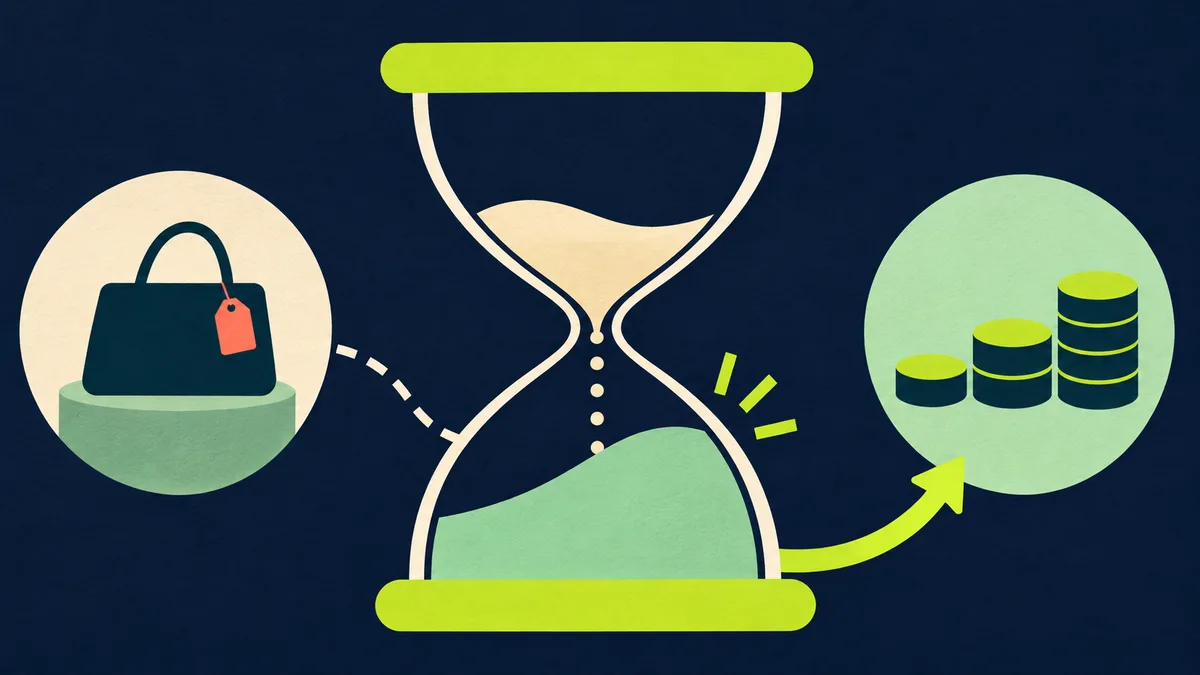
Buy now versus wait is not simply an emotional choice. Time has measurable benefits and costs. Waiting can build reserves or improve information, while delay can also mean continued rental cost, rising repair risk or lost usefulness. Put both sides on the same timeline.
Build the purchase timing estimate
Before deciding, create one worksheet for the cost of delaying with the financial improvement expected by a defined future date. Give cost of waiting, expected improvement, price uncertainty and decision trigger their own entries. This is more useful than a single affordability percentage because it shows which assumption changes the result and when the cash is required.
- Cost of waiting: Count rent, temporary repairs, substitute services and lost productive use.
- Expected improvement: Estimate additional savings, lower debt or firmer income by the target date.
- Price uncertainty: Use a range rather than assuming the item will become cheaper.
- Decision trigger: Set the cash, quote or information threshold that will end the wait.
Use a statement, quote or contract for cost of waiting wherever possible. Estimate price uncertainty as a range when the exact amount is not yet known. The high case belongs in the decision because leaving a line blank makes the base case look safer without supplying evidence.
How the inputs interact: Count rent, temporary repairs, substitute services and lost productive use. Estimate additional savings, lower debt or firmer income by the target date. These two entries establish the base case for purchase timing. If they use different dates or time periods, correct that mismatch before adding the remaining costs.
Where uncertainty enters: Use a range rather than assuming the item will become cheaper. Set the cash, quote or information threshold that will end the wait. Test both statements again after adding the expected improvement arriving later than planned. This shows whether the conclusion depends on a verified term, a household choice or an estimate that still needs evidence.
Questions that expose a weak purchase timing plan
Keep the purchase timing comparison on one timeline
The following questions turn choosing between an available offer and a later purchase window into a repeatable review. Record the evidence beside each answer and pause when a provider cannot explain a material term.
- Name what should improve during the wait.
- Set a date to review the decision again.
- Count the real cost of the temporary option.
- Avoid relying on an unverified future discount.
Do not assume urgency language proves that buying now is cheaper. Verify the offer expiry, inventory constraint and total price independently. A discount can still be unaffordable when the purchase drains required cash.
See purchase timing in a realistic example
Waiting four months may add 3,000 to savings and allow a current debt to end, freeing 180 each month. If the temporary alternative costs 250 a month, the delay costs 1,000 but improves both the deposit and future cash flow. That is a defined tradeoff, unlike waiting only because the decision feels difficult.
What changes the result is that a deadline and measurable trigger turn waiting into an affordability strategy. Use the cash buffer calculator for the household's own timing and amounts, then compare the result with the written agreement. The agreement, not the example, determines the legal payment and fees.
Stress-test purchase timing before committing
After this check, apply the affordability limit guide to the complete purchase. A written decision note should preserve the chosen limit, reserve floor, ownership period and condition that would make the household walk away.
The downside case for purchase timing includes the expected improvement arriving later than planned. Calculate the effect on cash today, the recurring budget and the reserve-recovery date. A plan that remains positive by only a few dollars needs more margin before commitment.
Official guidance behind the purchase timing checks
For an independent source during choosing between an available offer and a later purchase window, review the Consumer Financial Protection Bureau spending assessment. It recommends reviewing several months of actual spending, including irregular expenses and regular savings, before deciding what comfortably fits.
A strong choice demonstrates that a deadline and measurable trigger turn waiting into an affordability strategy. Treat unresolved fees, local rules and tax effects as open questions, not zeroes, and obtain qualified help when they could change the outcome.